

Introduction to Torque Wrenches
Start with the nightmare scenario of every mechanic/DIYer: stripped threads or cracked carbon fiber parts due to over-tightening.Explain that “hand-tight” is not accurate enough. You need a torque wrench for a wide range of applications, including automotive repair, heavy-duty machinery, and industrial settings, where precision is critical.This guide is for mechanics, DIYers, and anyone needing precise torque control.Choosing the right torque wrench can prevent costly damage and ensure safety in critical applications.
Introduce the two main contenders: the traditional Click Torque Wrench vs. the modern Digital (Electronic) Torque Wrench.
While click wrenches have been the standard for years, digital torque wrenches are designed for superior precision and reliability in demanding environments, offering the ease of use that modern projects demand.
Both click and digital torque wrenches are designed to ensure proper torque application, but digital models use electronic components for enhanced precision.
What is a Click Torque Wrench?
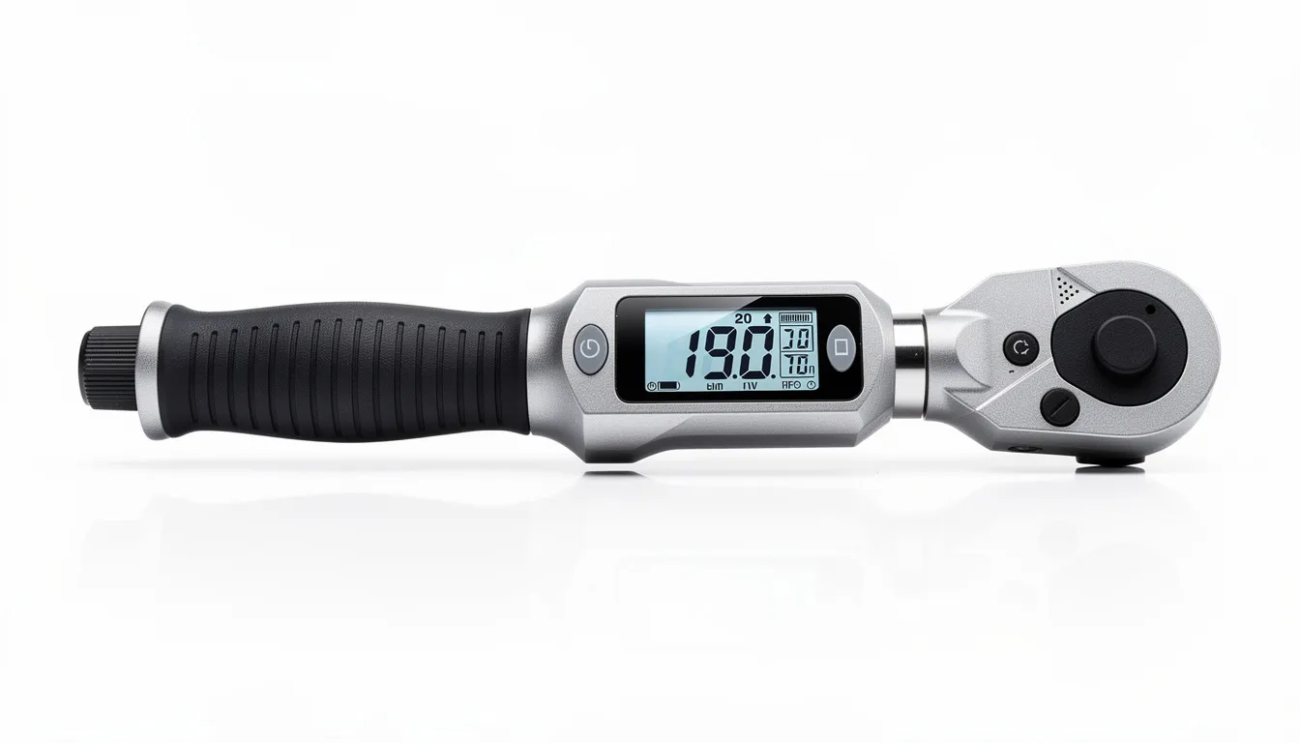
A click torque wrench is a mechanical tool designed to apply a specific amount of torque to a fastener, ensuring proper tension and load in various applications.
How it Works
Click torque wrenches use an internal spring mechanism that is set to a specific torque value, often measured in ft-lbs. When the set torque is reached, the wrench emits a physical “click” sound and feeling. For accurate torque application, it is important to place the wrench correctly on the fastener and apply force smoothly. Proper placement ensures the tool delivers the intended torque without error.
Pros
- Generally cheaper.
- Rugged/Mechanical feel.
Cons (Pain Points)
- Hard to read the scale (especially in dark corners or for older eyes). Many click torque wrenches use ft-lbs as a reference unit, which can be hard to read or convert for some users.
- Easy to miss the “click” in noisy environments.
- Limited range and difficult to set precise decimals.
- Need to “unwind” (reset to zero) after every use to maintain spring tension.
- Click wrenches rely on a mechanical reference point for accuracy, which can drift over time and require recalibration.
Now, let’s see how digital torque wrenches compare in terms of technology and features.
What is a Digital Torque Wrench?
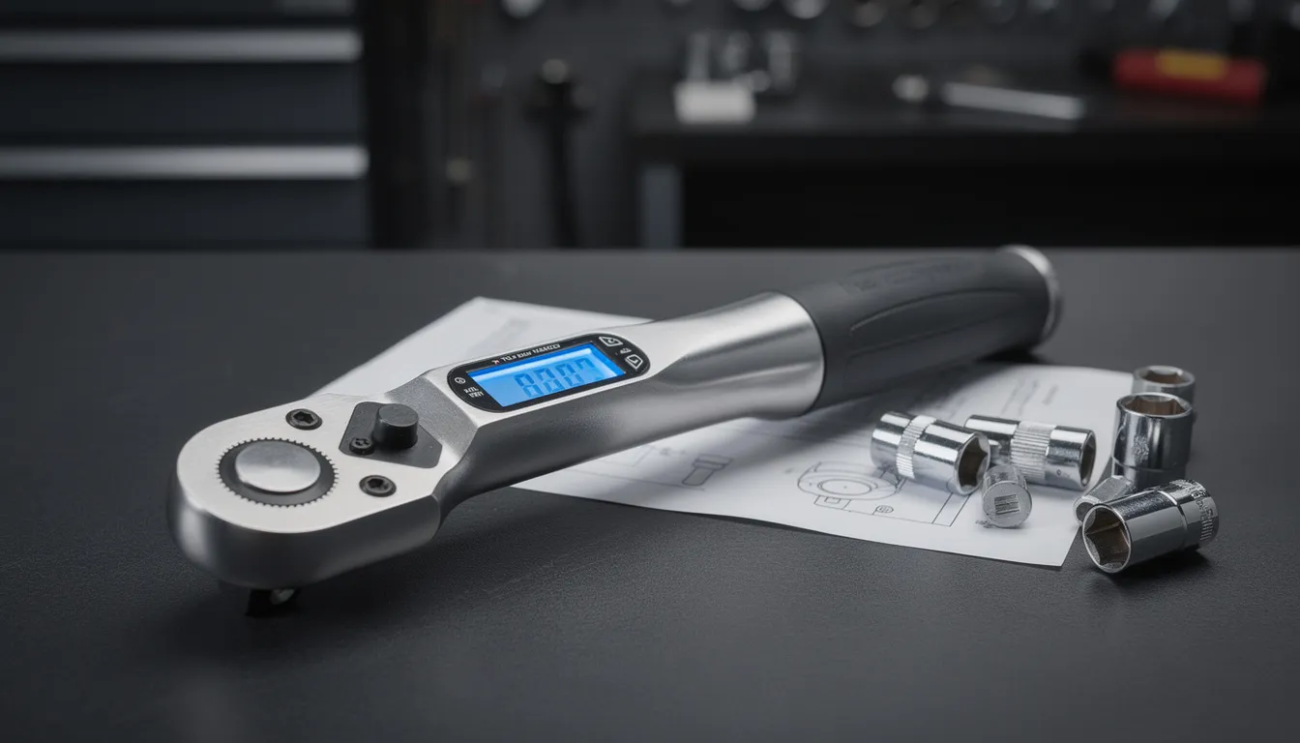
A digital torque wrench is a tool that provides precise measurement and application of torque in various fields such as automotive and manufacturing. Digital torque wrenches use electronic components to enhance precision and reliability.
How it Works
Digital torque wrenches are a type of electronic torque wrench that use a strain gauge and a digital processor to measure force. These tools are designed for precision and reliability in industrial, automotive, and aerospace applications. Digital torque wrenches prevent over-tightening by ensuring components are tightened to exact manufacturer specifications. They are also covered by warranties, providing reliability and customer support after purchase.
Drive Sizes & Typical Applications
| Drive Size | Typical Applications | Example Products & Specs |
|---|---|---|
| 1/4″ | Precision and low-torque applications (electronics, small engine, aerospace) | Sonic Tools NEXT 1/4″ (5-25 Nm, $225) |
| 3/8″ | General automotive and light industrial tasks | EC2250 (25-250 in.-lb, 3-28 Nm, $95.00), EC2100 (10-100 ft.-lb, 14-135 Nm, $99.00), Sonic Tools NEXT 3/8″ (20-100 Nm, $260; 10-50 Nm, $250) |
| 1/2″ | High-capacity automotive, truck, and industrial applications | EC3250 (25-250 ft.-lb, 34-339 Nm, $114.00), Sonic Tools NEXT 1/2″ (20-100 Nm, $260; 40-200 Nm, $275; 60-340 Nm, $305) |
| 3/4″ | Heavy-duty and industrial applications (large engines, machinery) | Check-Line Digital Torque Wrenches (up to 625 lbf-ft, 850 Nm) |
Key Features
- Torque Range: Wide torque ranges for each drive size, from as low as 5 Nm (1/4″ drive) up to 625 lbf-ft (Check-Line Digital Torque Wrenches, 850 Nm).
- High Accuracy: Typically ±1-2% (Check-Line Digital Torque Wrenches offer ±1% accuracy), better than the ±4% or higher found in traditional mechanical wrenches.
- Visual & Audio Alerts: LED lights and buzzers (Beep + Light) when target torque is reached. Some models provide tactile feedback through handle vibrations, especially useful in noisy environments.
- Multi-Unit Conversion: Instantly switch between Nm, ft-lb, in-lb, kg-cm without doing math, simplifying torque measurement.
- Peak & Track Modes: Real-time monitoring of force.
- Programmable Target Set-Points & Data Output: Many digital torque wrenches include programmable target torque set-points and data output capabilities for tracking and verification, supporting Industry 4.0 compliance.
- Torque & Angle Measurement: Can measure both torque and angle, essential for modern torque-to-yield fasteners.
- Data Memory: Some models store previous readings.
- Industrial Durability: Designed for demanding industrial environments.
Pros
- Higher Accuracy: Usually ±2% (vs ±4% for click).
- Easy Reading: Clear LCD display.
- Data Memory: Some models store previous readings.
- Industrial Durability: Built for tough environments.
Pricing
Digital torque wrenches typically cost between $150 and over $1,000, reflecting their advanced technology. For example, the EC2250 is $95.00, EC2100 is $99.00, EC3250 is $114.00, Sonic Tools NEXT 1/4″ is $225, 3/8″ is $250–$260, and 1/2″ is $260–$305. Check-Line models with higher capacities are priced accordingly.
With a clear understanding of both types, let’s compare them head-to-head to see which is better for your needs.
Head-to-Head Comparison
Main Criteria Comparison
| Criteria | Click Torque Wrench | Digital Torque Wrench |
|---|---|---|
| Accuracy | ±4% (if calibrated) | ±1-2% (more precise) |
| Ease of Use | Harder to read scale, can miss “click” | Clear LCD, visual/audio alerts |
| Durability | Slightly better on drops, mechanical | Robust for shop use, some warranty concerns |
| Price | Cheaper upfront | Higher initial cost, investment in safety |
Accuracy
Digital torque wrenches provide a clear digital reference for torque values, making them easy to read and reducing user error. However, mechanical (click) torque wrenches can be just as accurate if properly calibrated and maintained. Digital models are often perceived as more accurate due to their association with high-end brands, but this is not always the case.
Ease of Use
- Digital wins (No squinting at engraved metal scales).
Durability
- Click wins slightly on drops, but Digital is robust enough for normal shop use. When it comes to warranty, some digital torque wrenches are covered by comprehensive warranties, but users have noted that brands like Gearwrench have been criticized for their inconvenient and costly warranty process.
Price
- Click is cheaper upfront; Digital is an investment in safety (saves money on broken parts).
User Experiences
- Snap-On digital torque wrenches are highly recommended for engine work and are favored by engine and diesel technicians for their reliability and performance.
- Gearwrench digital torque wrenches are sufficient for most users’ needs, but some have experienced reliability issues, such as the tool crashing during back-to-back measurements, and have found the warranty process lacking.
- Mechanical torque wrenches, when used as a reference and calibrated properly, can match the accuracy of digital models.
Why Digital Precision is Essential for Modern Repairs
Carbon Fiber Bicycles
Carbon fiber cracks easily if over-tightened by even 1 Nm, making the correct place and placement of your digital torque wrench crucial for achieving accurate torque and preventing costly damage.
Precision Electronics/Engines
Aluminum engine blocks and delicate sensors require exact specs, and digital torque wrenches are used in a wide range of applications—including industrial, automotive, and aerospace—because of their precision and reliability.
The “Peace of Mind” Factor
Knowing exactly what torque you applied via the screen display gives you confidence, especially in demanding applications where accuracy and proper placement are essential for safety and performance.
Conclusion & Recommendation
Summary: If you are working on heavy suspension or lug nuts, a click wrench is fine. BUT, for precision work (bikes, engine tuning, electronics), Digital is the winner.
