

Introduction to Precision Tools
A 1/2 inch digital torque wrench with an angle is an essential tool for professional mechanics, advanced DIYers, and anyone who demands precision in automotive repair, manufacturing, or heavy equipment maintenance. For these users, achieving the correct torque and angle is critical to ensure fastener integrity, prevent equipment failure, and meet industry standards. In 2026, 1/2-inch digital torque and angle wrenches are considered indispensable for modern automotive repair, offering the accuracy and reliability required for today’s complex assemblies.
Digital torque wrenches with angle measurement provide a significant upgrade over traditional models. They not only deliver superior accuracy but also feature easy-to-read displays and built-in alerts for precise fastening. With built-in sensors, these tools can measure both the rotational force (torque) and the angular rotation (degrees) applied to a fastener, eliminating the need for separate angle gauges or protractors. This makes them especially valuable for tasks where both torque and angle specifications are required, such as tightening cylinder head bolts or critical engine components.
Knowing how torque wrenches fit into industries like automotive repair and manufacturing helps you pick the right one. The GEARWRENCH line includes electronic torque wrenches with 1/2″ drives, plus other drive sizes like 1/4 and 3/8 inches for different tasks.
A digital torque wrench with angle measurement gives you precise control over torque application, which helps prevent over-tightening or under-tightening.
Electronic torque wrenches have grown popular because they’re accurate and user-friendly.
Understanding terms like ft lb, in lb, and kg m is crucial when choosing and using these tools. For example, the Tekton 1/2 inch drive electronic torque wrench is calibrated to the ISO standard, which meets or exceeds the ASME standard.
Quick Summary: Why Choose a 1/2 Inch Digital Torque Wrench with Angle?
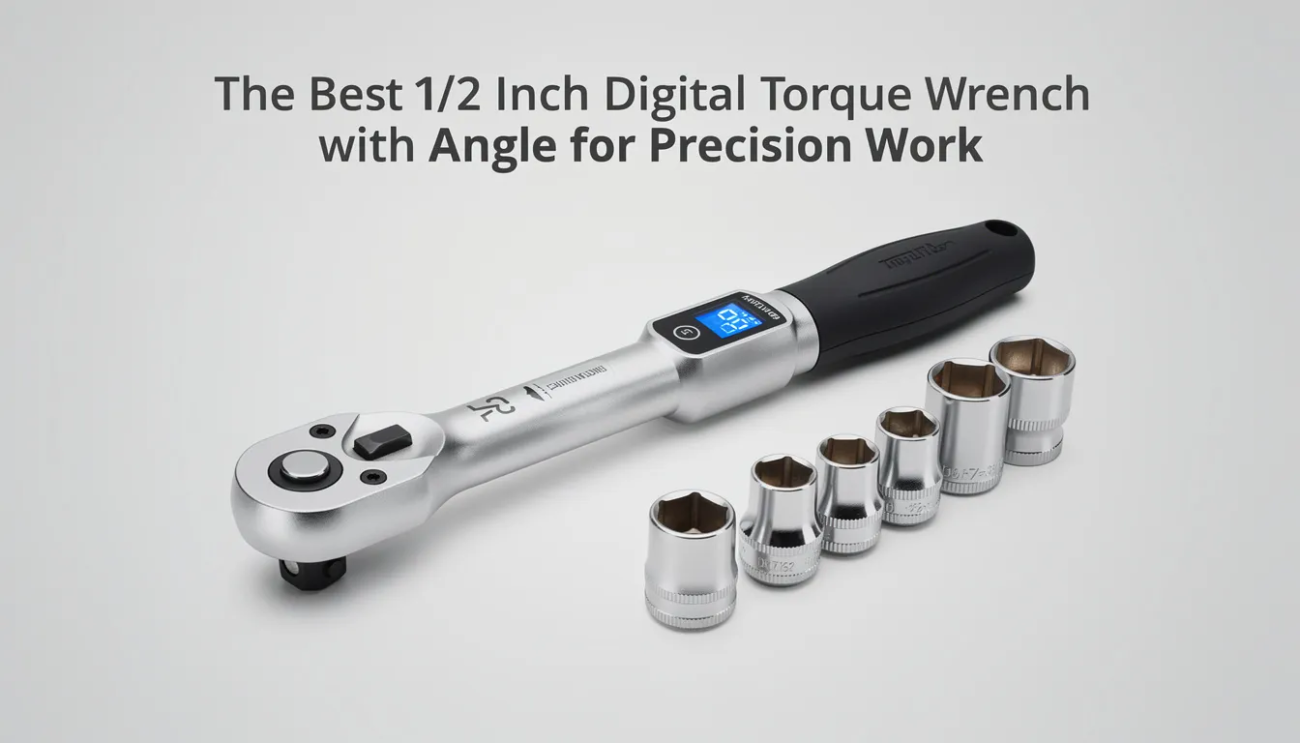
A 1/2-inch digital torque wrench with angle measurement provides:
- Superior accuracy for critical fasteners
- Easy-to-read digital displays for quick reference
- Audible, visual, or vibration alerts for precise fastening
- Built-in sensors to measure both torque and angle, eliminating the need for separate tools
- Essential functionality for modern automotive repair, engine work, and advanced DIY projects
Main Use Cases:
- Automotive engine assembly and repair
- Industrial equipment maintenance
- Construction and heavy machinery
- Any application requiring both torque and angle specifications
Types of Torque Wrenches
There are many types of torque wrenches: flex head, electronic, click-type, split beam, and micrometer, available in drive sizes such as 1/4, 3/8, and 1/2 inch. Each type has its own advantages depending on the job.
Beam and micrometer wrenches offer alternatives for specific tasks. Click-type wrenches are often preferred by DIYers because they’re simple and affordable, usually costing less than electronic models.
Choosing the right torque wrench depends on your drive size, torque range, and accuracy needs. Sometimes the cost and performance of split beam and click-type wrenches are similar, so either can work depending on your preferences.
It’s important to consider the pros and cons of each type before deciding.
A comfortable handle and secure grip are must-haves when selecting a wrench.
Understanding Torque Measurements
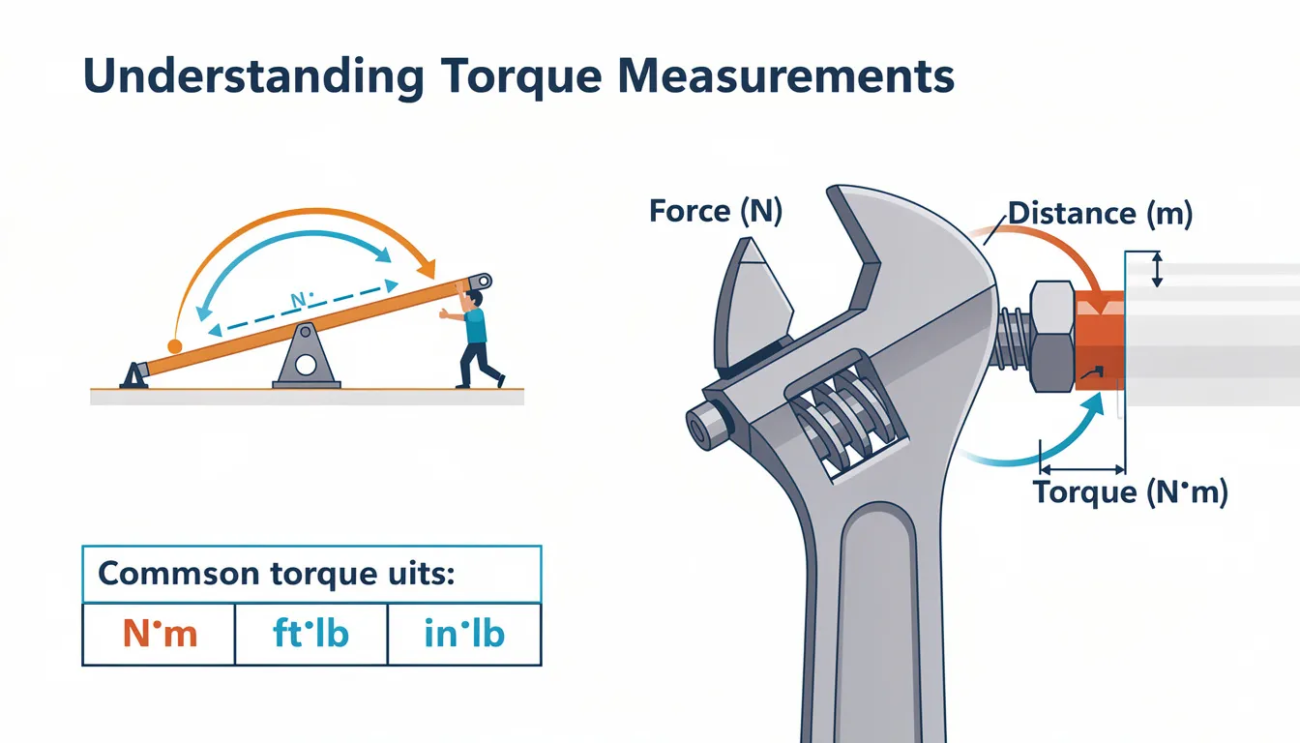
What is Torque?
Torque is the rotational force applied to a fastener, such as a bolt or nut. It is measured in units like foot-pounds (ft-lb), inch-pounds (in-lb), or Newton-meters (Nm). Applying the correct torque ensures that fasteners are tightened to the manufacturer’s specifications, preventing both over-tightening and under-tightening.
What is Angle Measurement?
Angle measurement refers to the degree of rotation applied to a fastener after reaching a specified torque. This is especially important in applications where a fastener must be turned a certain number of degrees beyond a set torque value for optimal clamping force.
Units of Measurement
- Foot-pounds (ft-lb): Commonly used in automotive and industrial applications.
- Inch-pounds (in-lb): Used for smaller fasteners and precision work.
- Newton-meters (Nm): The metric standard for torque measurement.
Digital torque wrenches can measure both rotational force (torque) and angular rotation (degrees), and can switch between units like ft-lb, in-lb, and Nm for maximum versatility.
Why Digital Torque Wrenches with Angle Matter
A 1/2 inch digital torque wrench with angle can measure both torque and angular rotation (degrees) in a single tool. Built-in sensors eliminate the need for separate angle gauges or protractors, streamlining your workflow and reducing the risk of error.
Key Features to Consider
Torque Range and Accuracy
- Choose a torque wrench with a range that matches your typical tasks (e.g., 30-300 ft-lb for 1/2 inch drive models).
- Look for high accuracy and calibration to industry standards (ISO, ASME).
Display and Alerts
- Easy-to-read digital displays show the target torque and angle.
- Sequential LEDs, audible beeps, or vibration alerts notify you when the target is reached.
Unit Switching
- Ability to switch between ft-lb, in-lb, Nm, and kg-m for different applications.
Flex Head Design
- Flex head adds versatility, making it easier to reach bolts in tight or awkward spaces.
Additional Features
- Handle vibration or beep when target torque is reached for improved user experience.
- Comfortable handle and secure grip for extended use.
Benefits of Digital Tools
Key Advantages
- Improved accuracy over manual wrenches
- User-friendly operation with digital displays
- Real-time feedback (audible, visual, or vibration alerts)
- Multiple torque setting storage for efficiency
- Reduced human error and better quality control
- Reliable torque and angle measurement to prevent fastener and equipment damage
When to Use Digital Torque Wrenches
- Ideal for professional mechanics and advanced DIYers working on engines, transmissions, and critical assemblies
- Essential for applications requiring both torque and angle specifications
While digital torque wrenches offer many benefits, for general DIY mechanic work, a manual wrench may suffice for simple tasks like rotating wheels. However, for precision and repeatability, digital is the way to go.
Applications and Use Cases
The GEARWRENCH 85079 1/2” flex head electronic torque wrench is designed for demanding jobs. Its torque range of 25-250 ft/lb makes it great for automotive tasks like tightening engine bolts, securing transmissions, and torquing wheel lug nuts to spec.
In industrial and construction settings, it ensures fasteners are tightened accurately, reducing equipment failure risks.
The flex head offers a secure grip and lets you reach bolts in tight or awkward spots, making work easier and faster. Whether you’re a pro mechanic, technician, or a serious DIYer, this wrench delivers the accuracy and ease needed for critical jobs.
Its electronic system guarantees every fastener is tightened to the right lb value, protecting engines, transmissions, and other components.
Comparison with Manual Torque Wrenches
Comparing the GEARWRENCH 85079 electronic torque wrench to traditional manual models shows clear advantages. You can set a precise target torque, and the wrench gives immediate feedback—like beeps or vibrations—when you reach it.
This enhances accuracy and consistency, lowering the chance of over- or under-tightening.
Manual click-type wrenches rely on feel and are more prone to user error, especially on critical fasteners. While manual wrenches are cheaper and fine for basic jobs, electronic torque wrenches provide more accurate, repeatable results with less guesswork.
If accuracy is your priority, the electronic option is the better choice.
Accessories and Add-ons
To get the most from your GEARWRENCH 85079, consider these accessories:
- Extension bars and socket sets: Expand torque range and drive size.
- Torque multipliers: Provide extra force for stubborn bolts.
- Sturdy carrying case: Protects your wrench and accessories during storage and travel.
- Calibration certificate: Verifies your wrench’s calibration—important for professional or regulated work.
These add-ons help you tackle a wider range of jobs, whether in the shop or on the go.
Calibration and Maintenance
Why Calibration Matters
- Ensures your torque wrench remains accurate and reliable
- Most manufacturers recommend annual calibration
Calibration Process
- Use certified equipment and follow manufacturer guidelines
- Even budget models like HF digital torque wrenches need regular calibration
Maintenance Tips
- Clean and store your wrench properly to extend its life
- Troubleshoot common problems to minimize downtime
- Understand warranty and support options for peace of mind
How to Use a 1/2 Inch Digital Torque Wrench with Angle
Step 1: Get Familiar with the Tool
- Review the user manual and understand the wrench’s features, such as toggle switches and digital displays.
Step 2: Set the Desired Torque and Angle
- Use the display to select the correct torque and, if needed, the angle setting for your application.
Step 3: Position the Wrench
- Attach the appropriate socket and place the wrench on the fastener.
Step 4: Apply Steady Pressure
- Hold the wrench properly and apply steady, consistent pressure until you receive an alert (beep, vibration, or light) indicating the target torque or angle is reached.
Step 5: Follow Manufacturer Instructions
- Always follow the manufacturer’s guidelines for best results and safety.
Knowing typical applications, such as engines and transmissions, helps you use your tool effectively.
Troubleshooting Common Issues
Even top electronic torque wrenches can have issues. Common problems with the GEARWRENCH 85079 include:
- Inaccurate readings
- Dead or faulty batteries
- Worn or damaged parts
Troubleshooting Steps:
- Check the user manual or contact customer support for error messages or inconsistent results.
- Regular calibration and routine maintenance, like cleaning and lubrication, can prevent many issues.
- If your wrench breaks or malfunctions, replacement parts are usually available, or you can send it back for repair or replacement.
Keeping your wrench in good shape ensures accurate performance every time.
Safety Precautions
Safety is crucial when working with torque wrenches. Over-tightening or under-tightening fasteners can cause serious problems.
Safety Tips:
- Use proper lifting and handling techniques to avoid injury or equipment damage.
- Wear protective gear like gloves and safety glasses.
- Be cautious when using torque wrenches near open flames or sparks.
- Know emergency procedures to minimize harm in case of accidents.
Buying Guide: How to Choose the Right Model
Choosing the right torque wrench means considering several factors:
- Torque range: The GEARWRENCH 85079 1/2” flex head electronic torque wrench covers 25-250 ft/lb, suitable for most automotive and industrial jobs.
- Flex head design and electronic measurement: Offers both flexibility and precision.
- Drive size: Make sure it fits your fasteners.
- Project requirements: Consider if you need a tool for tight spaces or one with higher accuracy.
- User reviews: Help you find a reliable, high-performing model.
- Budget, brand reputation, and customer support: All play a role in your decision.
By weighing these factors, you can pick a wrench that delivers consistent, accurate results and stands up to regular use.
Conclusion and Recommendations
A 1/2 inch digital torque wrench with angle measurement is a valuable tool for anyone working with fasteners—especially professional mechanics and advanced DIYers.
When choosing one, consider accuracy, calibration, and ease of use.
Get to know your wrench’s features, such as the display and toggle switch, tch for best results.
Digital tools offer better accuracy and ease compared to manual wrenches.
Following safety and maintenance guidelines will keep your wrench reliable for years.
Apex Innovance is here to help you find the perfect 1/2 inch digital torque wrench with an angle to fit your needs.
